Logo

- Back People
- Back Research
- Back Events
- Léon Walras Institute
The Laboratoire d’Économie Mathématique et de Microéconomie Appliquée (LEMMA) is an economics research centre at Paris-Panthéon-Assas University, bringing together researchers specialising in game theory, decision theory, and applied microeconomics.
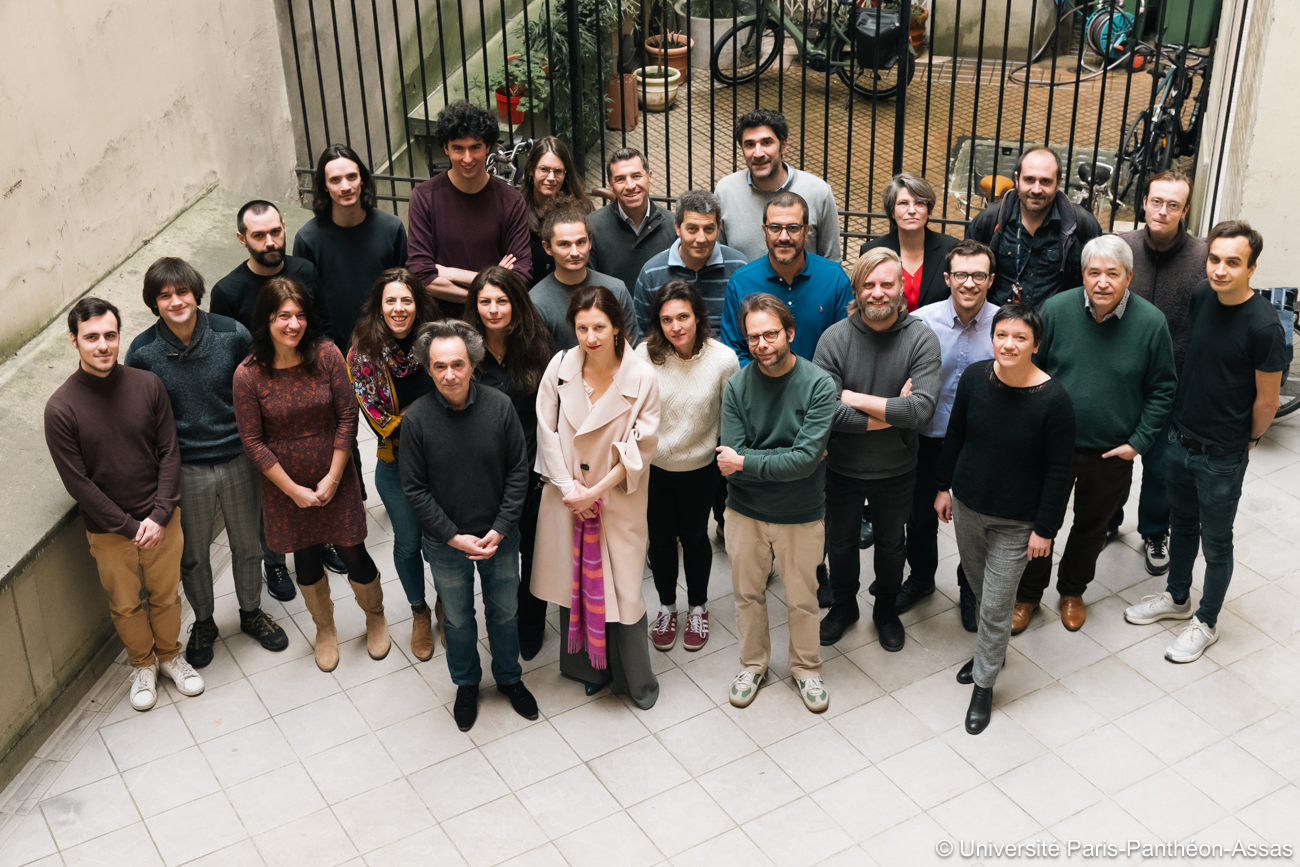
The Laboratoire d’Économie Mathématique et de Microéconomie Appliquée (LEMMA) brings together around thirty permanent members, six associate members, and fifteen PhD students. The laboratory's research activities are organised around two main research areas: Games and Decision-Making and Applied Microeconomics.
Founded in 2003 by a group of researchers in economics, mathematics, and computer science at Paris-Panthéon-Assas University, LEMMA is a member of the LabEx MME-DII and subsequently its institutional successor, the Federation for Modelling Sciences (FSM). In 2024, the laboratory joined the Léon Walras Institute (iLW), which aims to strengthen the links between research and education by bringing scientific activities and teaching together within a single institution.
Located at the Centre Desgoffe in the 6th arrondissement of Paris, the laboratory regularly hosts international researchers, both as resident scholars and visiting academics, and counts several members of the Institut Universitaire de France (IUF) among its researchers.
The Games and Decision-Making research area brings together researchers in theoretical economics, applied mathematics, and computer science, working on four main themes. The first - Decision-Making and Social Choice - covers a range of issues related to the axiomatic analysis of preferences, aggregation theory, and voting theory. The second - Games, Learning and Investment - focuses on the analysis of strategic behaviour in dynamic settings and under uncertainty. The third - Mathematics and Linguistics of Game Theory - draws on mathematics, biology, and philosophy to develop an interdisciplinary approach to both decision theory and game theory. The fourth - Analysis in Economics and Finance - examines how market frictions reshape the conditions for arbitrage.
The Applied Microeconomics research area brings together researchers who use a variety of analytical tools to investigate three main themes. The first - Education, Health and Labour - examines employers' practices and their effects on employee well-being and occupational health, as well as the impact of institutions and public policies on inequalities, health, and educational choices. The second - Public Policy, Institutions and Political Economy - adopts an interdisciplinary approach, combining insights and methods from economics and political science to investigate, in particular, the determinants of trust in public policies and political polarisation. The third - Money, Finance and Banking Frictions - draws on monetary search theory to better understand the adoption of emerging forms of money (e-money and cryptocurrencies) and explain their coexistence with more traditional means of payment.

Director

Head of the Games and Decision-Making Research Area

Head of the Applied Microeconomics Research Area
Share this page